Deeply configurable Ongoing Monitoring
600+ law firms trust Legl














Why firms move to Legl for ongoing monitoring of clients
Deep configuration
Get alerted about risks directly tied to your firm’s policies across individuals and businesses.
Analyse impact
Understand how data sources and match sensitivity impact your alert volumes in a click.
Automatic escalation
Establish pathways to keep your risk & compliance teams notified of high risk clients.
Risk agents
Get clear risk signals that provide you with decision-ready information to action.
600+ law firms trust Legl with their AML compliance
It's not about monitoring every transaction daily. It's about having the visibility to catch problems before they become serious, and the audit trail to demonstrate that the firm's processes are robust when regulators ask. It's about 'exception reporting' and not 'everything reporting'
Will Taylor
,
CFO / COO


We can act much more appropriately to risk. We can quickly see when additional enhanced due diligence or source of wealth checks might be needed, but we can also avoid overdoing things when the additional information we have shows that residual risk is actually lower.
Helen Strachan
,
Practice Director & MLRO


With regulatory expectations continuing to evolve, we wanted to ensure our AML and compliance operations were positioned for the next level. Legl's platform gives us enhanced oversight and consistency across all departments, allowing us to maintain the rigorous standards our clients expect as we continue to grow.
Guy Hurst
,
Compliance Manager


Robust AML compliance throughout the client lifecycle
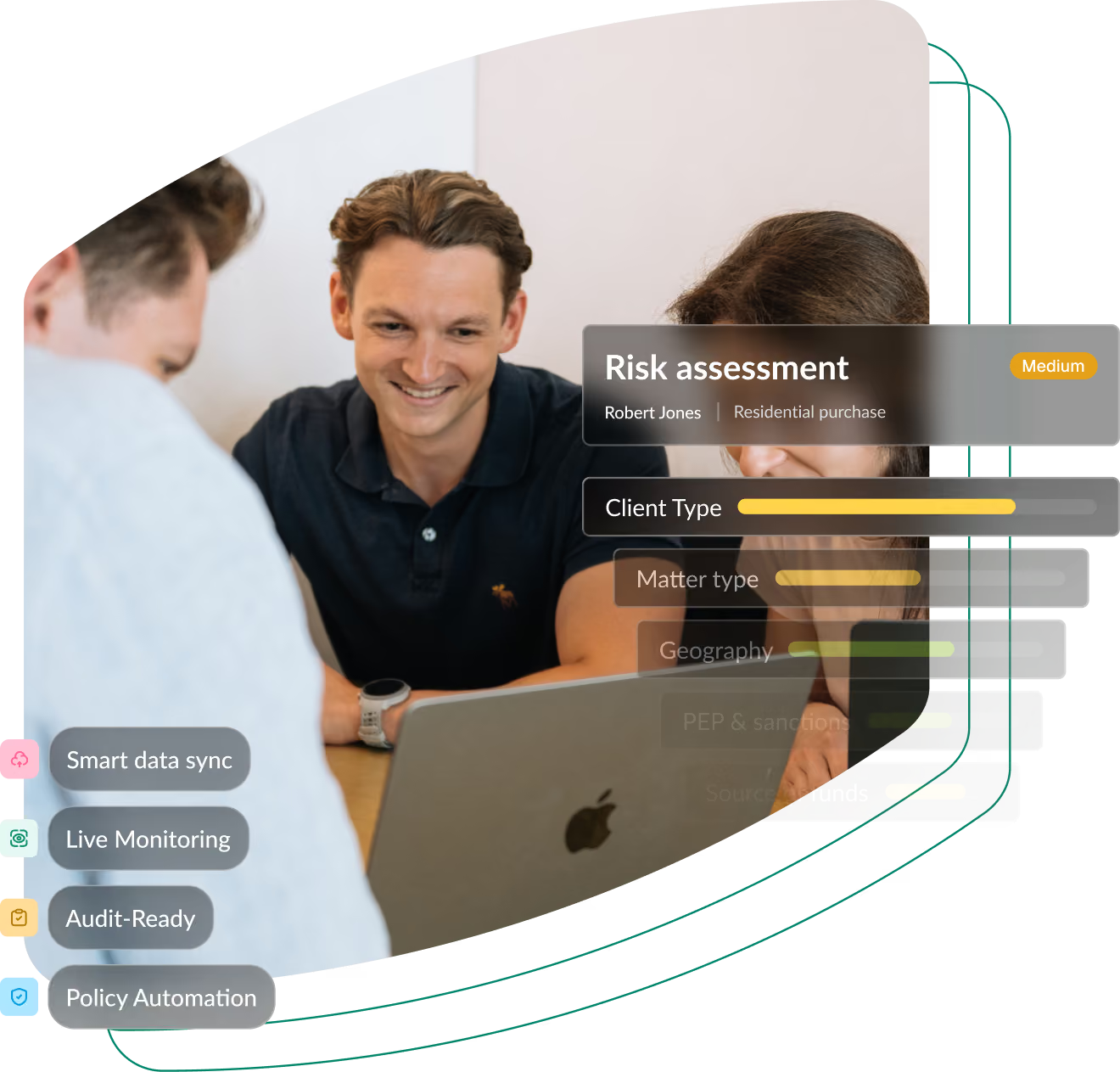
Risk agents accelerate decision-making
Get decision-ready information through risk agents that research, gather and parse risk signals to help you identify potential matches in alerts.
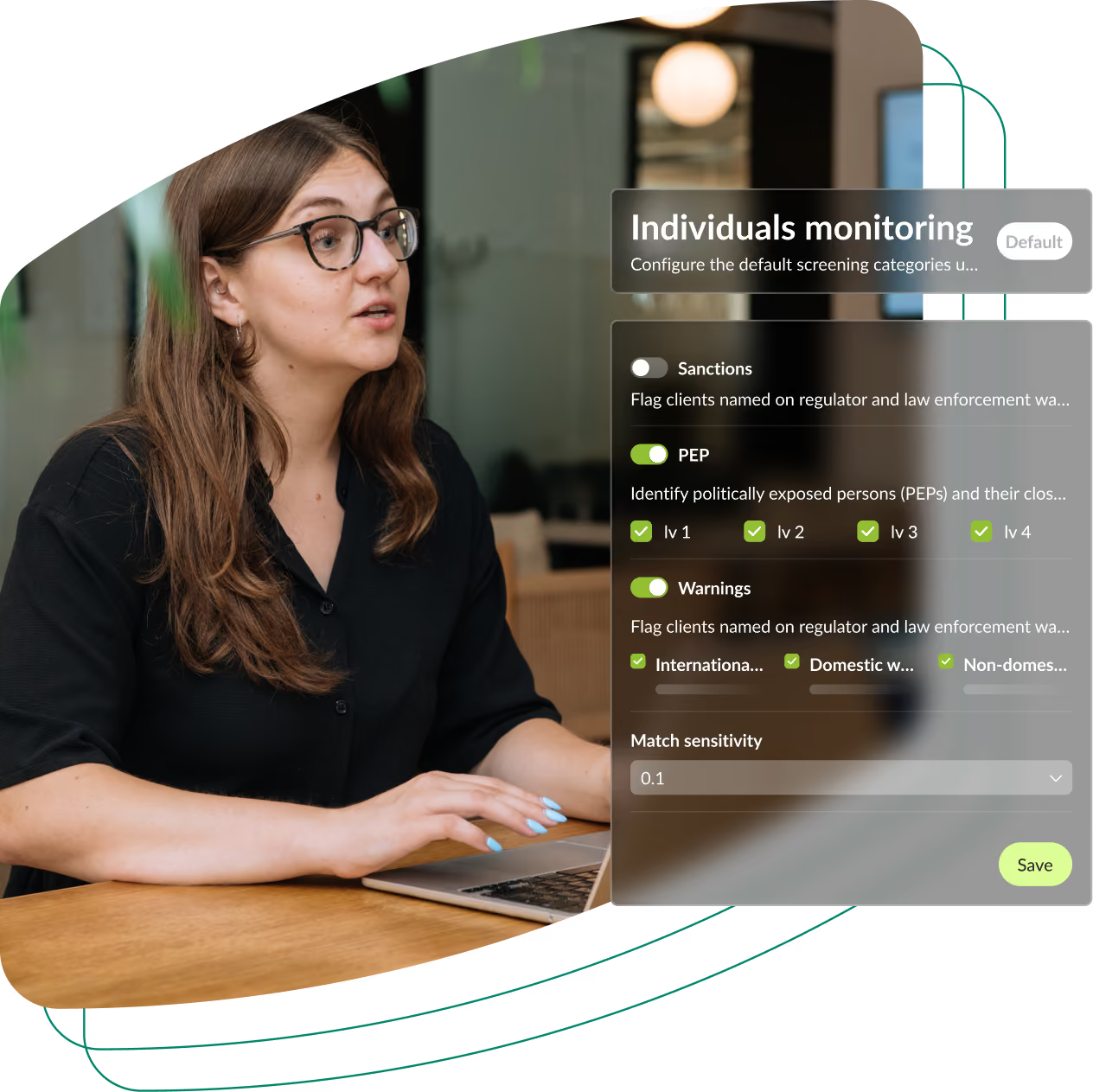
Deep configuration to the risk your firm cares about
Your firm can configure individual and company monitoring settings including specific data sources and match sensitivity.
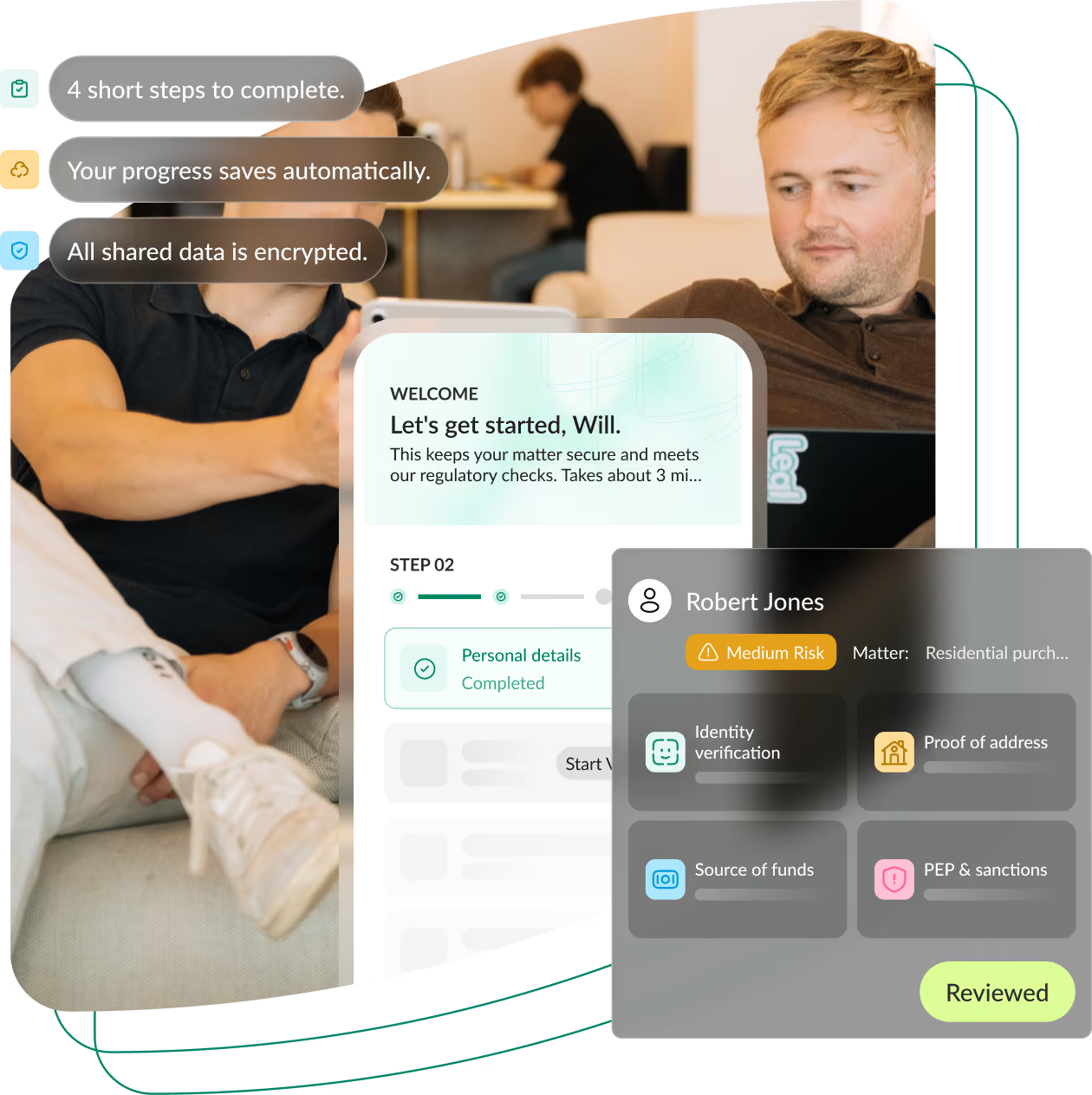
Automatic escalation pathways
Set up which stakeholders on your team need to be notified about changes to a client’s status and ensure clear oversight across the firm.





Frequently asked questions
Can I edit my firm's screening configuration myself?
Yes. Admins control screening from your monitoring settings, and changes apply firm-wide. For individuals you choose which categories you screen against. Sanctions, PEPs (including which seniority levels), warnings by source jurisdiction, and adverse media, alongside where you pick the risk types, how widely to search, and how sensitive matching should be, is all available via the settings. This also applies to Company Monitoring settings where you firm can choose to categorise also the risk level of the alterts that you receive.
Can I reassign ongoing monitoring alerts to different people in my firm?
Yes, this can be done individually or in bulk. You simply open an alert, select the reviewer and add a comment. Your colleague will receive an email with the direct link.
Can Legl help my firm to reduce the volume of ongoing monitoring alerts?
Yes, you control which updates generate an alert across individuals and company monitoring. There is deep configuration and controls here, and your firm can analyse the impact of any changes that you'd like to make on the last 90 days of activity so you can see how many alerts you've received and whether that volume would decrease with the proposed changes. For individuals, you can whitelist matches you've confirmed don't relate to your client to reduce false positives resurfacing.
Can my firm configure the types of ongoing monitoring alerts that we receive?
Yes there are comprehensive configuration settings available to your firm. For company monitoring, admins of your account can turn any company monitoring category on or off, and can control how alerts are categorised across high, medium and low risk. For individuals, admins can configure screening categories on or off, which PEP levels or risk types are included, and how strict name matching is in practice.
How are risk agents used in the ongoing monitoring of clients?
Legl's risk agents work through all the evidence, including details you already hold on the client, the source supplied with the alert and its own web-based research. You get a clear recommendation with a confidence level, a plain-language explanation and a record of exactly which sources have been searched and checked. The reviewer still confirms whether the alert is a match or not a match and marks the alert accordingly.
How long does it take to review an ongoing monitoring alert?
Legl's risk agents do the research for you, presenting you with decision-ready information designed to accelerate the review experience. Alerts can be filtered by priority and actioned in bulk. You could review a result in as little as a few seconds as risk signals are clearly supplied to you and your team to inform your decision.
What are the regulatory requirements around ongoing monitoring?
Under the Money Laundering Regulations 2017, regulated firms need to monitor the business relationship for its duration, keeping client due diligence documents and information up to date, and reviewing the risk profile of the client. Sanctions obligations and continuous and strict-liability, which is why sanctions status needs checking on an ongoing basis rather than only at the initial client onboarding stage. The SRA has provided guidance that firms should be using digital screening tools and be able to evidence what they have carried out in a clear audit trail. Legl automates the detection of alerts and automatically compiles the audit trail - the compliance decisions remain with your firm.
Who receives alerts about clients that we are monitoring?
Alerts are routed to the people responsible for reviewing them - they can be assigned to a reviewer, who gets an email with a direct link to the update. Firms can turn on auto-assignment, which routes new alerts automatically by type. Separately, a weekly monitoring summary can be routed every Monday to your firm's designated compliance contacts, typically the MLRO or AMLCO. You can add multiple recipients if needed. All alerts sit on the firm-wide Monitoring dashboard.
How can an MLRO get a picture of risk across all the clients of the firm?
The Compliance overview gives the picture across PEP and Sanctions matches, high-risk rated risk assessments, clients in high-risk jurisdictions etc. Compliance leadership teams can get a picture of live risk through ongoing monitoring, they have access to summaries of alerts or changes in the client base and they can easily filter by priority or risk type to get to the heart of information quickly.